u/bee-fee
-
18points
-
32points

-
7points
-
22points

-
5points
Pit-Gland Tarweed, Spikeweeds, & More | Every Native Species in the Tarweeds/Tidytips/Goldfields/Woolly Sunflowers Tribe (Madieae - Asteraceae) in the US & Canada (reddit.com) [Informational/Educational]
-
43points

-
9points
Western Rosinweeds | Every Native Species in the Tarweeds/Tidytips/Goldfields/Woolly Sunflowers Tribe (Madieae - Asteraceae) in the US & Canada (reddit.com) [Informational/Educational]
-
27points

-
8points
-
80points

-
7points
Madia/Common Tarweeds | Every Native Species in the Tarweeds/Tidytips/Goldfields/Woolly Sunflowers Tribe (Madieae - Asteraceae) in the US & Canada (reddit.com) [Informational/Educational]
-
39points

bee-fee
bee-fee
Nature laughs at us for misunderstanding it. A crack between asphalt and concrete is closer to CA buckwheat's natural habitat than the mulched and composted beds most people are growing it in.
bee-fee
Finishing up the Deinandra/Hemizonia clade by finally getting around to Hemizonia itself, plus a couple more unique genera. Next week's post will be a collection of all the remaining genera in the Tarweed/Tidytip subtribe, and that'll be the last of Madieae.
These images, along with the rest of the tribe, are available for downloading/viewing on Google Drive:
https://drive.google.com/drive/folders/1SXwJ2mRp9shxin6MYEDufa7LYlkmW4wE?usp=drive_link
If you want to see more of these guides (like Milkweeds, Sunflowers, Coneflowers, Coreopsis, Beggarticks & More), you can access everything I've published so far from this folder:
https://drive.google.com/drive/folders/14THUt-XrG0hJtxFBc84TVbBk8R20AoeV?usp=drive_link
bee-fee
I like to joke that I'm the only person in the world that's jealous of Bakersfield residents, because it's in a completely unique environment unlike any other major city in California. There's lots of similarities between Bakersfield and where I live, but we don't have San Joaquin Kit Foxes, Nelson's Antelope Squirrels, or Fresno Kangaroo Rats, because Bakersfield lies within a desert shrub & forb ecosystem that's mostly restricted to the southwest side of the valley:
https://i.imgur.com/AoFttB5.png
I wouldn't worry about funds, this kind of garden has been very cheap to establish and maintain for me. When I first tried native plant gardening I bought a bunch of shrubs and perennials at a nursery, tried growing them in containers, and they all suffered a similar fate to your Sycamore. But a few packets worth of Phacelia distans, Eriogonum gracile, & Amsinckia menziesii/intermedia seed was enough to permanently establish them in my garden's seed bank, and now I have hundreds of flowers from February to December without needing any input on my part. Those seeds were way cheaper than the nursery plants, especially the Amsinckia which I collected for free, and there was no irrigation or mulching required. The main challenges are controlling weeds, managing gophers and ants, and maintaining the sunny exposed environment I described before. I can go into detail on what that entails if you like.
The large black bee you're talking about is the Valley Carpenter Bee, and they're great, but they're also the most common bee in the valley after honeybees. I've seen them around the garden pollinating our citrus trees for years, long before I started growing any native plants. But if you like bees, you are absolutely in the right place. A few years ago a study was conducted analyzing data regarding the distribution of US native bee species, and while the data is incomplete, they found the highest diversity is concentrated in arid & temperate parts of the southwest, including the Central Valley. Before I found this map, I had a hunch that we must have an especially high bee diversity, not just because of all the flowers, but because the diversity I've seen in my own little garden with a just a few flowering annual species has been absurd. I don't even know what to call most of them, many are so small and move so fast that I can't get a single photo, but just seeing all the variety and watching them buzz around the flowers from Spring to Fall has been highly motivating. Not to mention all the hoverflies, wasps, beetles, & sawflies.
https://i.imgur.com/m0mIgIy.png
https://nsojournals.onlinelibrary.wiley.com/doi/10.1111/ecog.06584
The hills and canyons leading to Caliente have remained mostly intact because they weren't useable for agriculture, but the same change in soils & topography responsible for that also means the ecosystem there is very different than what grew on the valley floor. Some of the flowers overlap between the two, but the typical shrubs of the hills are mostly CA Ephedra, Bladderpod, CA Buckwheat, CA Snakeweed, Mock Aster, & Bakersfield Cactus. These species can be seen as indicators that you've left the valley's saltbush scrub and arid "grasslands", and are entering the dry chaparral zone of the foothills. The valley floor has a bit of shrub diversity in the alkali flats, but the upland desert shrublands were entirely dominated by Atriplex polycarpa, aka 'Allscale'/'Cattle Spinach'. This is functionally the 'keystone' of the ecosystem, and supports lots of critters. My favorite being the Western Pygmy Blue butterfly, aka the smallest butterfly in North America:
https://www.calflora.org/app/taxon?crn=1000
https://www.inaturalist.org/taxa/53843-Brephidium-exilis
The rest of the flora is pretty much entirely flowers, most of them annuals, and unfortunately commercial availability of these species is very limited. These are the species I've found that are commonly available and are also true Bakersfield natives:
Eschscholzia californica; Amsinckia menziesii/intermedia; Lupinus nanus & Lupinus densiflorus/microcarpus var. densiflorus; Gilia tricolor; Phacelia tanacetifolia; Nemophila menziesii; Castilleja exserta;
Platystemon californicus; Papaver heterophyllum
The two best suppliers I've found for the SJ Valley are Theodore Payne Foundation & Seedhunt, a small online-only supplier based in the Pajaro Valley. Both suppliers carry Leptosyne calliopsidea, a locally endemic wildflower, plus Phacelia distans. TPF also carries Malacothrix glabrata, though that species wasn't super common in the area. Seedhunt carries lots of species I've seen nowhere else, including these Bakersfield natives:
Layia pentachaeta ssp. albida; Lasthenia minor; Lessingia pectinata var. tenuipes; Malacothrix coulteri; Salvia carduacea; Eremalche parryi (out of stock this year)
https://store.theodorepayne.org/collections/seeds-1
https://www.seedhunt.com/california-natives/
But before you buy any of these, I recommend looking the species up on the Jepson eFlora. The 'Habitat' section tends to include a description of soil, and you can use that to narrow down the ones that are most likely to thrive on your land:
https://herbariadb.berkeley.edu/eflora/
Aside from what's commercially available, there's a huge list of locally endemic species that aren't for sale, like Deinandra pallida, Hollisteria lanata, Eriogonum gracillimum, Phacelia douglasii, or Trichostema ovatum. But just because they're uncommon, or even listed on the CNPS rare plant inventory, that doesn't necessarily mean they'd be hard to grow in a suburban environment. My favorite post on this sub last year was from another Bakersfield resident, who had Trichostema ovatum volunteers in their backyard:
https://old.reddit.com/r/Ceanothus/comments/1np0459/volunteer_san_joaquin_blue_curls_trichostema/
The only perennial I grow and would recommend is Heliotropium curassavicum, which a lot of nurseries carry, and has been a great supplemental flower during the heat of mid-summer. In the wild it's generally found near waterways, so I grow it in the margins of irrigated raised veggie beds, and it spreads a lot, but it's been worth the effort.
I'll wrap up this long-winded essay with some of my favorite iNaturalist observations in the area, to give an idea of what the environment looked like based on the few relicts that still bloom:
https://www.inaturalist.org/observations/194307720
https://www.inaturalist.org/observations/155520944
https://www.inaturalist.org/observations/151135870
https://www.inaturalist.org/observations/59946387
https://www.inaturalist.org/observations/157589254
https://www.inaturalist.org/observations/109122243
bee-fee
Sycamores are a riparian species, the only ones native to Bakersfield grow directly out of the Kern riverbed, so it's no surprise it's drought-stressed. Same goes for the other large trees in the area, Valley Oak, Black Willow, Cottonwood, & White Alder.
In our (San Joaquin Valley) climate, or in similarly dry & treeless ecosystems, I think it's better to make use of shade from architecture and awnings. And use that shade for people, not for native plants. The species native to our plains & desert shrublands need full sun exposure, and soil that is dry/unirrigated, exposed to wind, and has little-to-no leaf litter built up. So whether native or non-native every irrigated shade tree creates an inhospitable, unnatural environment.
bee-fee
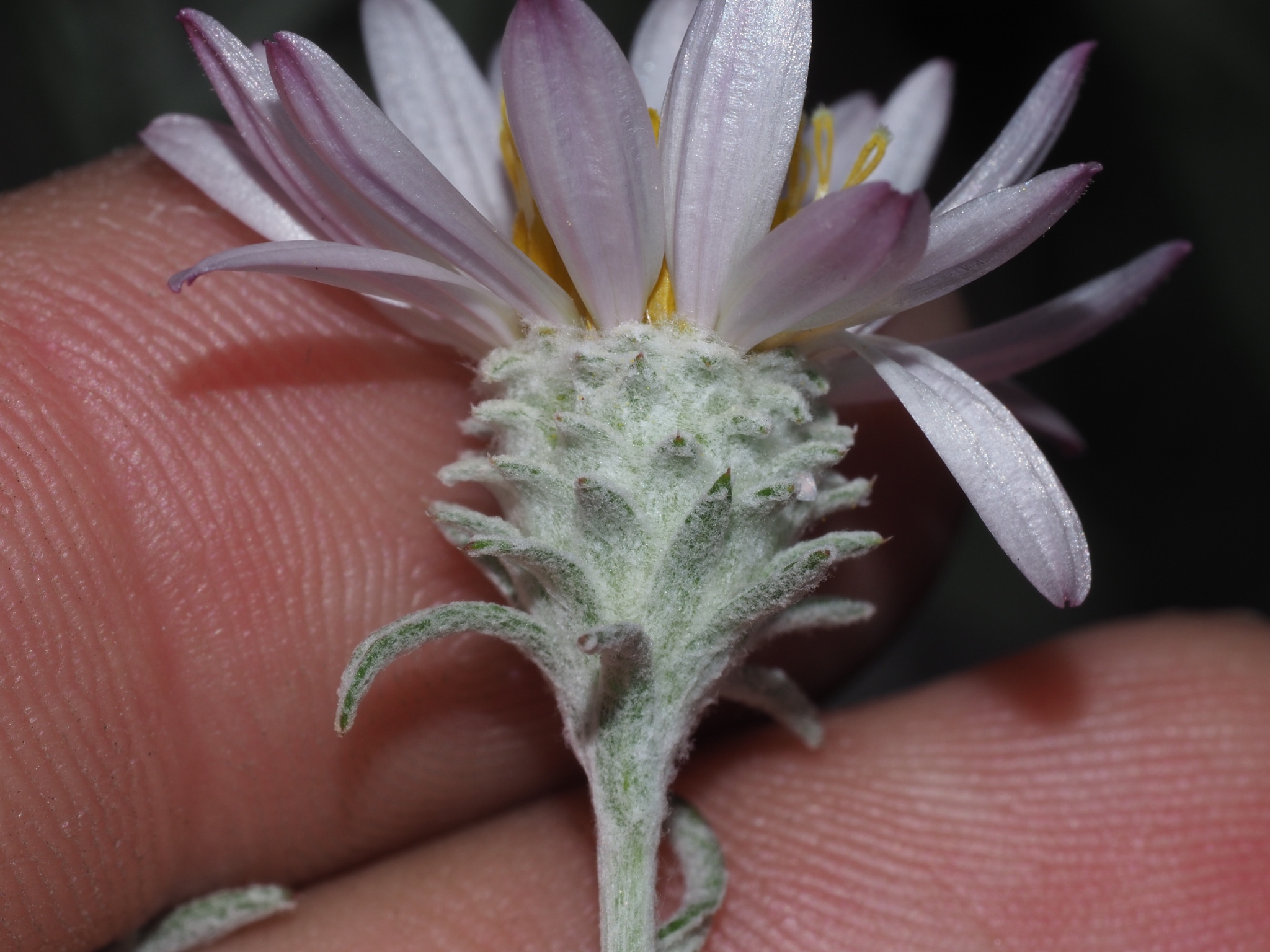
Heterotheca is in the Aster tribe, so it'll be a while before I cover those! But even when members of this family look similar, there's an easy way to distinguish them.
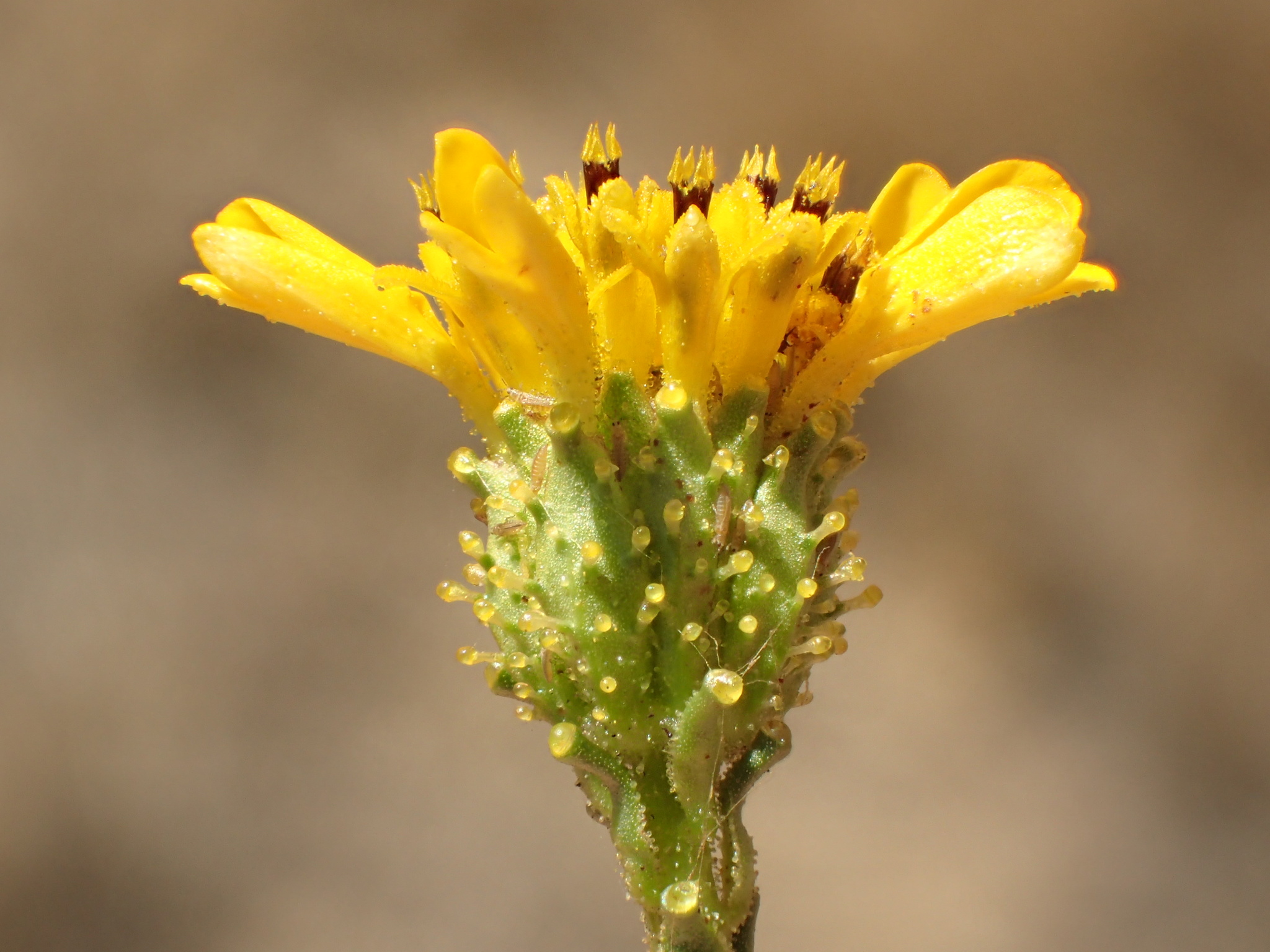
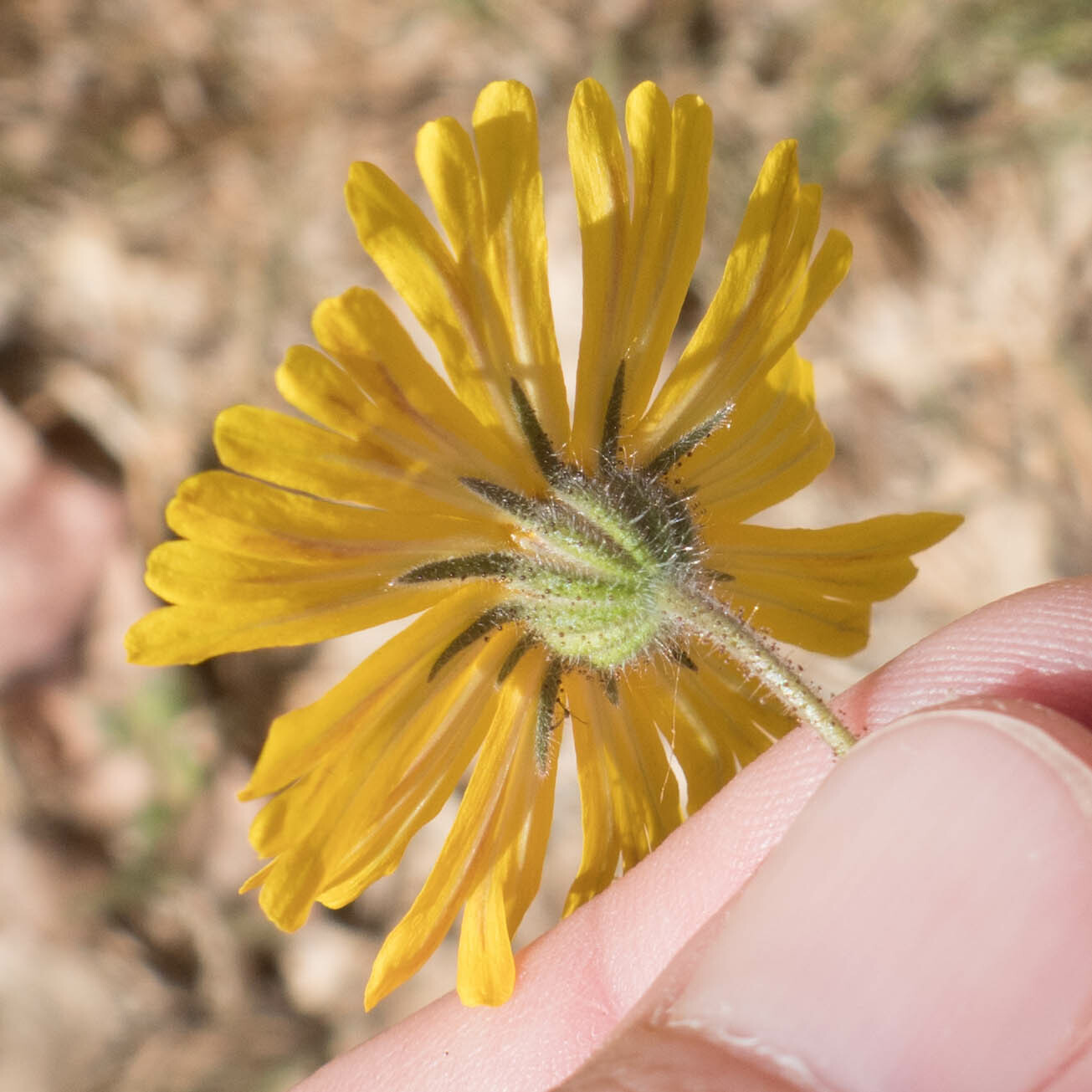
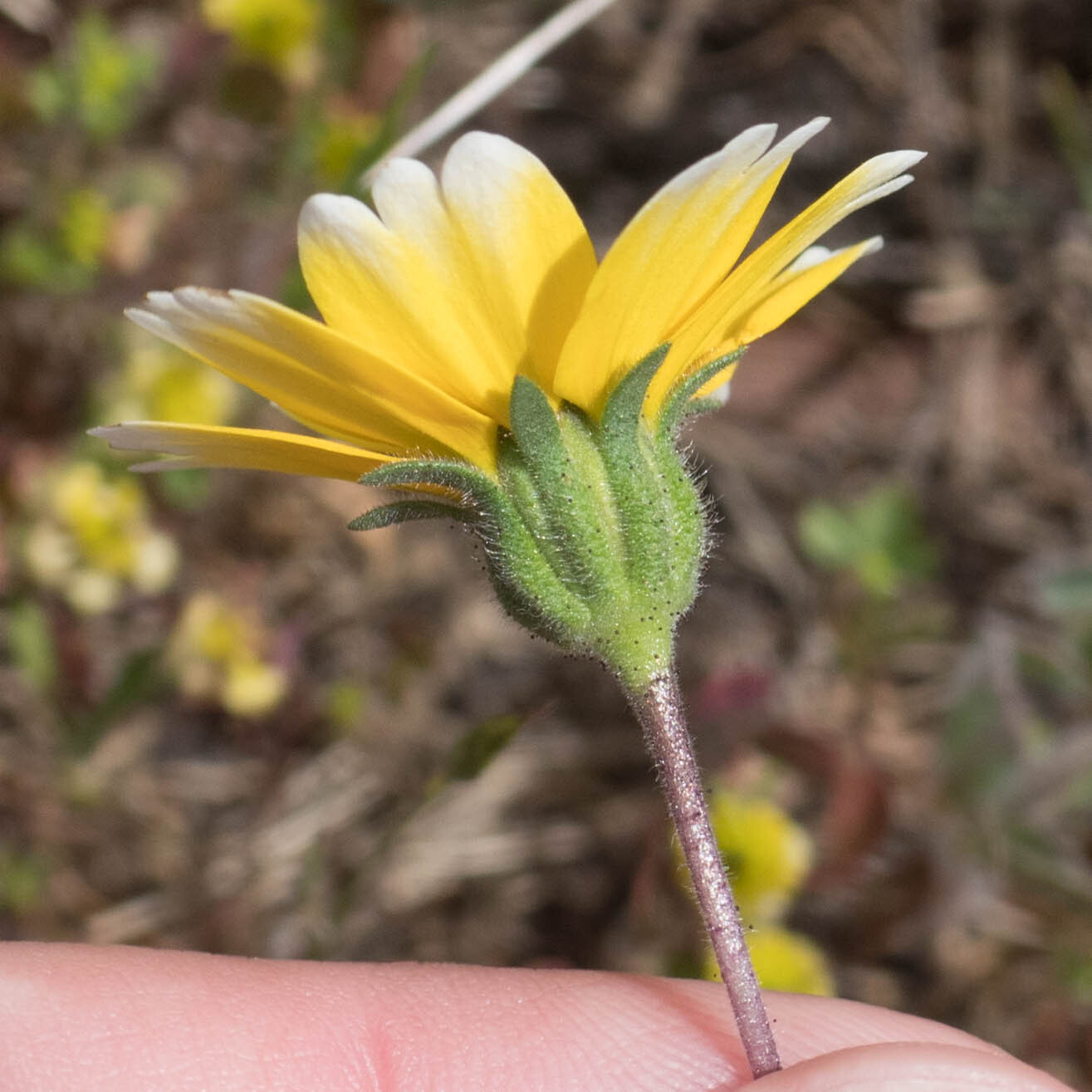
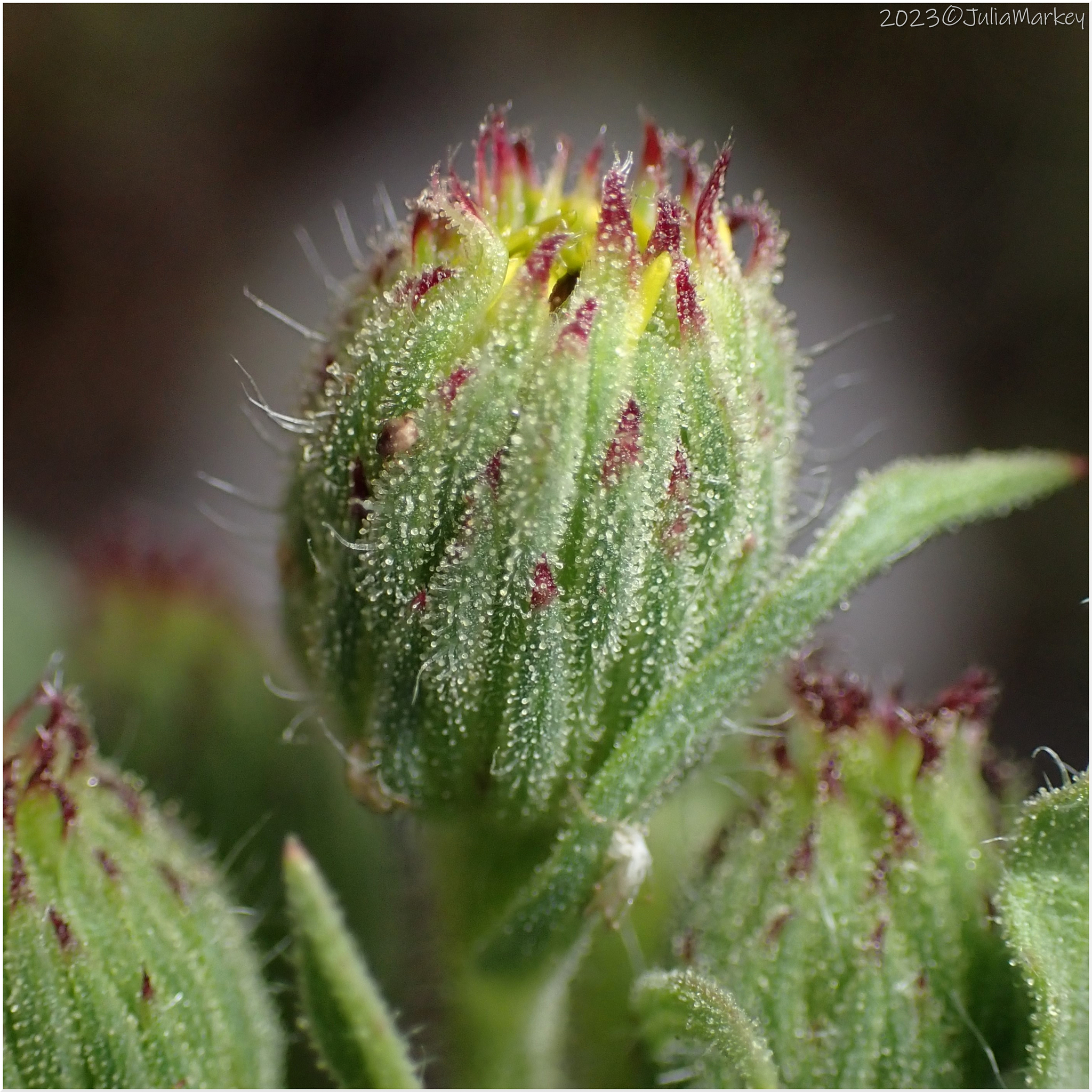
The 'phyllaries' are the little leaflets that enclose the buds and sit under the flower heads in Asteraceae. In Madieae and related tribes (Heliantheae, Coreopsideae, etc.), there is only one row of phyllaries. In Astereae, there are several rows of phyllaries that layer on top of each other like shingles.
Graceful Tarplant vs. Common Madia vs. Common Tidy Tips:
https://inaturalist-open-data.s3.amazonaws.com/photos/147928983/original.jpeg
https://inaturalist-open-data.s3.amazonaws.com/photos/426143540/original.jpg
https://inaturalist-open-data.s3.amazonaws.com/photos/641108272/original.jpg
Telegraphweed vs. California Aster vs. Great Valley Gumweed:
https://inaturalist-open-data.s3.amazonaws.com/photos/261331163/original.jpeg
https://inaturalist-open-data.s3.amazonaws.com/photos/368377141/original.jpg
https://inaturalist-open-data.s3.amazonaws.com/photos/98856898/original.jpeg

bee-fee
Continuing the Deinandra clade with two more small genera. Like the rest of the clade, these are mass-blooming winter annuals that flower in the dry season, and were formerly included in the genus Hemizonia. Along with Deinandra, these three genera are particularly important to me, not just because of my local species but because of their overall distribution. Much of their diversity is found in California's most densely populated areas, the Central Valley, the Bay Area, LA, Inland Empire, San Diego, Monterey, etc. As a result they have become some of the rarest plants in the state. One of top threads on this subreddit last month was discussing threats of development facing one of the few remaining "Smooth Tarplant" populations. But usually when we talk about habitat destruction and conserving California's most vulnerable plants, we aren't thinking of "Spikeweeds", "Tarplants", or "Tarweeds", and I fear that's been a major loss for our pollinators.
These images, along with the rest of the tribe as it is published, are available for downloading/viewing on Google Drive:
https://drive.google.com/drive/folders/1SXwJ2mRp9shxin6MYEDufa7LYlkmW4wE?usp=drive_link
If you want to see more of these guides (like Milkweeds, Sunflowers, Coneflowers, Coreopsis, Beggarticks & More), you can access everything I've published so far from this folder:
https://drive.google.com/drive/folders/14THUt-XrG0hJtxFBc84TVbBk8R20AoeV?usp=drive_link
bee-fee
South Bay is the furthest inland they get, any hotter and drier and they get replaced by different species of Garrya.
https://www.calflora.org/app/taxon?crn=3748
bee-fee
Another large genus formerly included in 'Hemizonia', this time their center of diversity is in northern California, thriving in inland areas from the Sierras, to the Bay Area, to southwest Oregon.
These images, along with the rest of the tribe as it is published, are available for downloading/viewing on Google Drive:
https://drive.google.com/drive/folders/1SXwJ2mRp9shxin6MYEDufa7LYlkmW4wE?usp=drive_link
If you want to see more of these guides (like Milkweeds, Sunflowers, Coneflowers, Coreopsis, Beggarticks & More), you can access everything I've published so far from this folder:
https://drive.google.com/drive/folders/14THUt-XrG0hJtxFBc84TVbBk8R20AoeV?usp=drive_link
bee-fee
The largest tarweed genus, species of Deinandra were formerly included in the genus 'Hemizonia'. These species used to fill central and southern California with golden "superblooms" in the dry heat of late spring, summer, & fall. While most of these are regional endemics and not commercially available, Clustered Tarweed is native to most of the densely populated areas of socal, and is available from suppliers like Theodore Payne Foundation.
These images, along with the rest of the tribe as it is published, are available for downloading/viewing on Google Drive:
https://drive.google.com/drive/folders/1SXwJ2mRp9shxin6MYEDufa7LYlkmW4wE?usp=drive_link
If you want to see more of these guides (like Milkweeds, Sunflowers, Coneflowers, Coreopsis, Beggarticks & More), you can access everything I've published so far from this folder:
https://drive.google.com/drive/folders/14THUt-XrG0hJtxFBc84TVbBk8R20AoeV?usp=drive_link
bee-fee
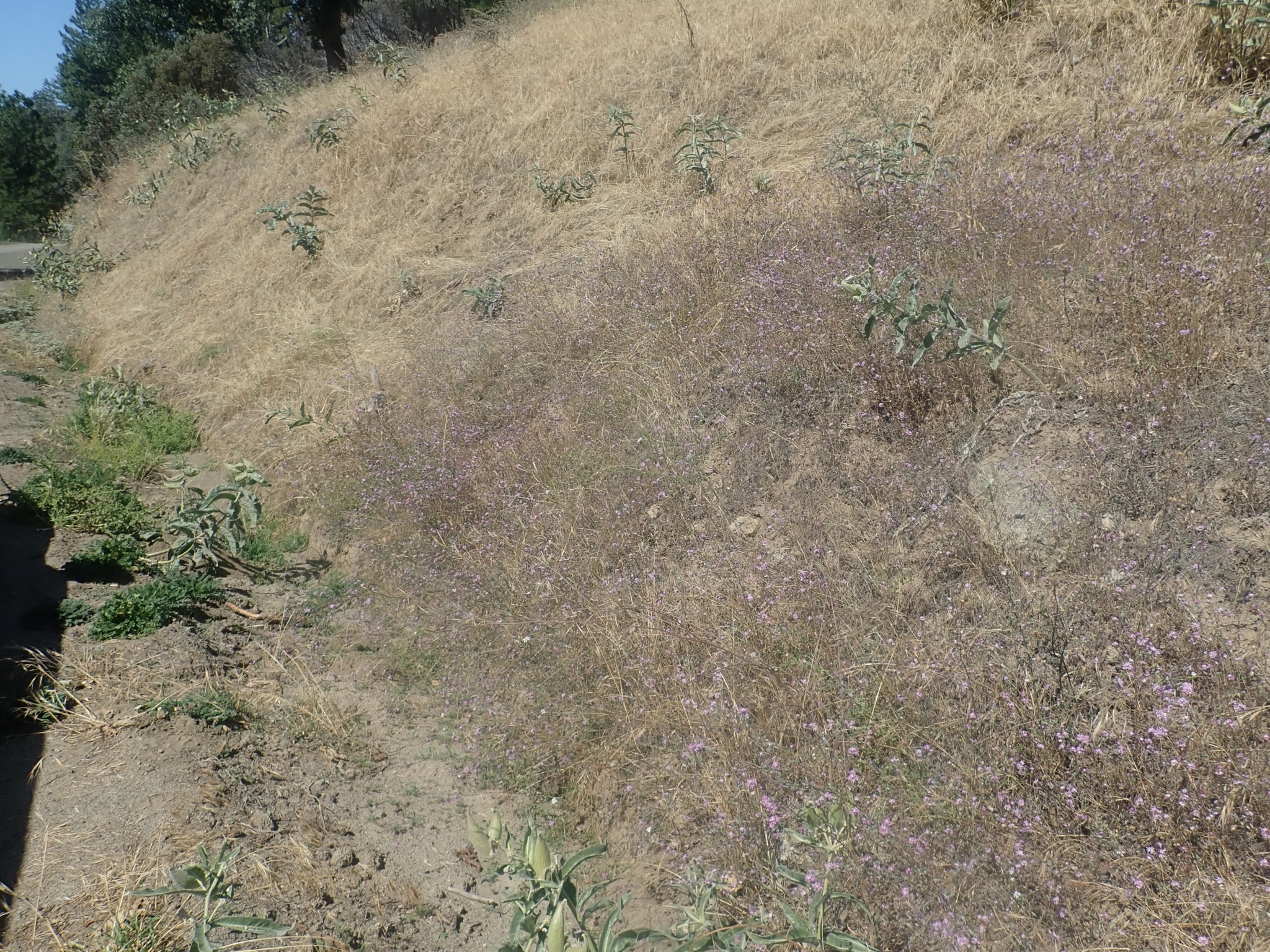
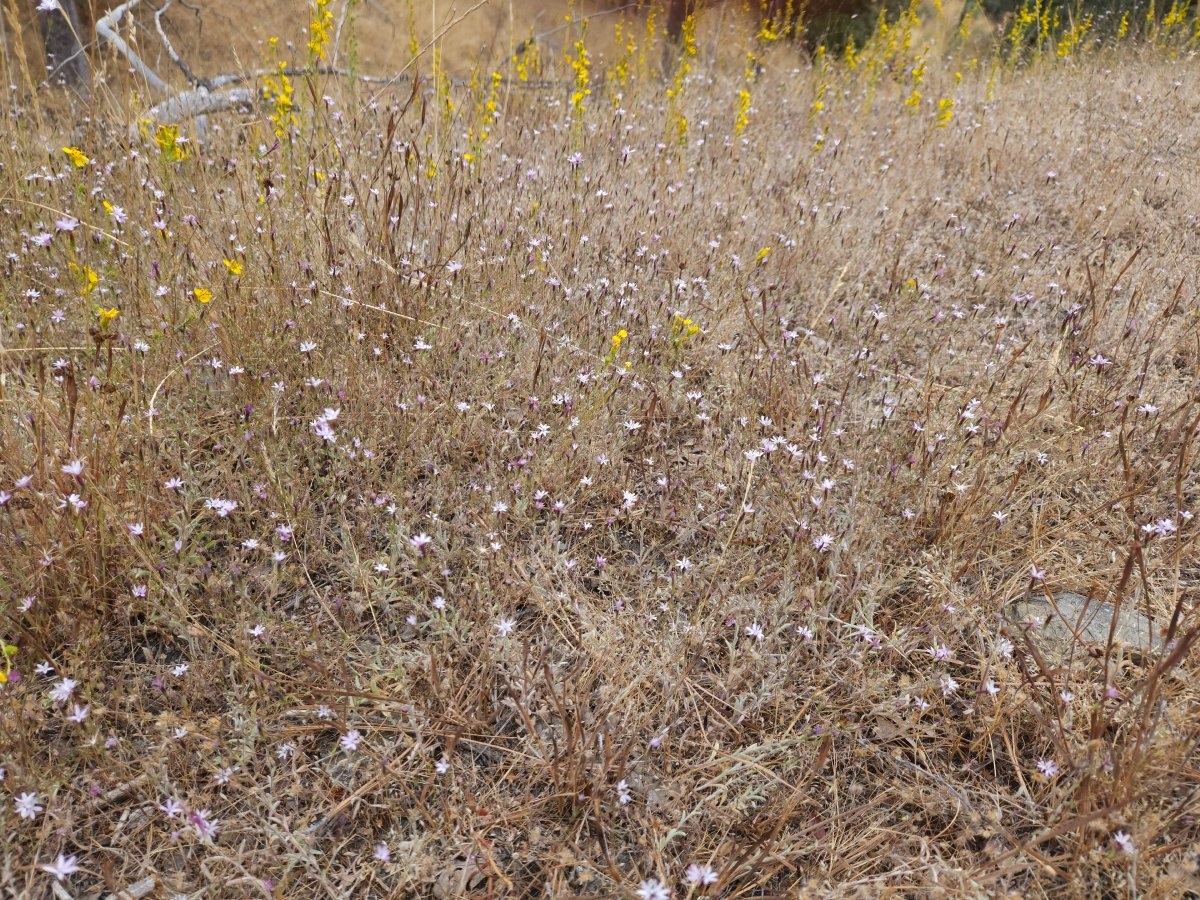
There are 4 species local to Calaveras county. It's definitely not L. nana, & I doubt it's L. virgata, but the other two species often grow in masses through the dry vegetation like this. I don't know what else it could be given the shape of the buds, the leaves, and the color of the flowers, but it's definitely not Epilobium.
https://inaturalist-open-data.s3.amazonaws.com/photos/319783726/original.jpeg
https://d2yo0ezu2b1v2y.cloudfront.net/images/app/up/entry/591/177492.jpg
bee-fee
Pic 2 looks like a Lessingia species, probably L. leptoclada, nemaclada, or virgata. These are annual summer/fall-blooming Asters, almost entirely endemic to California.
https://www.calflora.org/entry/psearch.html?namesoup=Lessingia&countylist=any&plantcomm=any&format=photos&orderby=taxon
bee-fee
Madia, the genus the whole tribe is named for, is the first genus of Tarweeds to be covered in this series. It is also the most widespread, with some species ranging from the east coast to South America. Most species are associated with montane or coastal meadows/shrublands/grasslands, are not too showy, and range from tiny to the tallest species in the tribe. One major exception is Madia elegans, aka 'Common Madia', 'Elegant Madia', or 'Spring Madia', a showy species that's widespread in California, easy to find for sale in suppliers' inventories, and has been reliable in my own garden since I planted it several years ago.
These images, along with the rest of the tribe as it is published, are available for downloading/viewing on Google Drive:
https://drive.google.com/drive/folders/1SXwJ2mRp9shxin6MYEDufa7LYlkmW4wE?usp=drive_link
If you want to see more of these guides (like Milkweeds, Sunflowers, Coneflowers, Coreopsis, Beggarticks & More), you can access everything I've published so far from this folder:
https://drive.google.com/drive/folders/14THUt-XrG0hJtxFBc84TVbBk8R20AoeV?usp=drive_link
We've finally come to the last species of Madieae, a handful of small miscellaneous genera spread throughout the Tarweed subtribe (Madiinae) that I had skipped over until now. If you haven't seen the rest of this series, you can check out the whole thing on Google Drive. It's seed sowing season, and heavy rains are on the way, so find your Madieae species, get some seeds, and have yourself a golden flowering garden next spring, summer, and fall:
https://drive.google.com/drive/folders/1SXwJ2mRp9shxin6MYEDufa7LYlkmW4wE?usp=drive_link
If you want to see more of these guides (like Milkweeds, Sunflowers, Coneflowers, Coreopsis, Beggarticks & More), you can access everything I've published so far from this folder:
https://drive.google.com/drive/folders/14THUt-XrG0hJtxFBc84TVbBk8R20AoeV?usp=drive_link