u/local_blue_noob
local_blue_noob
local_blue_noob
Yeah, 8a here and did it last winter on my limes I had in the garage.
I mixed up a slurry and then sprayed them down using a handheld pump sprayer. You'll have to put on a coat, wait for it to dry, and then reapply until you get enough on the leaves. Took me 3-4 coats applied over several hours. I reapplied every few days for about two weeks until the spider mites died or got tired of being sprayed.
It was a pain, but I try to avoid miticides. I'll probably have to do it this winter too.
local_blue_noob
Don't borther with DE if the tree is outdoors.
It might work in a climate controlled indoor space, but would be a pain. Mix it into a slurry and spray the tops and bottoms of every single leaf. You'll need to put enough on so that when it dries, the plant looks sugar coated.
Outdoors...
Dew and high humidity will make DE useless until it dries out.
Any rain or overhead irrigation will just wash it right off.
It's almost impossible to get an even coating on a full canopy without commercial spraying equipment.
And if everything goes perfectly, you're going to kill every good bug that visits the plant. Bees, butterflies, ladybugs, spiders, etc.
local_blue_noob
Most of mine recovered from my Jul/Aug fert, but I have a couple of 1sq ft spots that died and a 7x3 area close to the curb that died. Asters took over the big spot. They're about to bloom, so I don't have the heart to spray them.
I usually scalp my lawn late April. I'll plug what didn't fill in on the smaller spots in May. If I get lazy with the plugger, then I'll put down sod in the larger area.
I space the plugs 6 inches apart. It's usually filled in by late summer.
local_blue_noob
Hey mane. Same area... Probably the same city. Fungus hit me hard too.
You can plug now if you want, but our growing season is almost over. We've got enough time left for the roots to establish, but don't expect it to start spreading until next May/June.
local_blue_noob
Summary of his description in Chapter 5:
Grevane is a large man who dresses in a khaki trench coat and a dark fedora. His face is long and pale, yet leathery, giving him the appearance of someone who has spent years exposed to blowing desert wind and sand. He speaks with a thick British accent. When he is amused, he reveals narrow, yellow teeth and a smile likened to a crocodile's.
Edit: I checked "A Fistful of Warlocks" too and nothing else is provided other than him being a British man who speaks with a "quite well-to-do" accent and a "pleasant" tenor voice.
local_blue_noob
Hmm... I'm still leaning towards irrigation being the cause of your issues. I saw in another post that you use a Rain Bird 32SA. Is that still the case?
I had to look up the manufacturer specs, but I see that the average precipitation rate for that rotor is ~0.6 inches per hour (assuming a 3 GPM nozzle and good water pressure). If you're using a default runtime of 15 minutes per zone, that's barely 0.5 inches of water a week.
To get the 1.5 to 2 inches of water each week that a tall fescue / KBG mix needs to survive summer, you'd need to run the sprinklers for an hour for each zone, 3x a week.
This is a lot of assumptions on my part, so the best thing would be to measure the output. Put a few straight sided, flat bottomed containers (tupperware or tuna cans work perfectly) out in the yard. Run the zone for 30 minutes then measure the water depth with a ruler. Multiply that number by two, and you'll have your exact inches-per hour output to set your timers.
local_blue_noob
What's your irrigation schedule look like during the summer?
It sounds like your grass is going dormant, which happens to cool-season grasses in the summer if they don't get enough water. You'll need to water it deeply and regularly to keep it green through the heat.
A warm-season grass may handle the summers a little better if you're interested in switching.
local_blue_noob
You can try Soundbooth Theater. The first episode is free: Thank You for Volunteering
It's super immersive and has a lot of extra content. Some people don't like the added effects and music, but I think it adds to the experience.
local_blue_noob
West TN here. Bermuda will go brown after the first frost in Oct/Nov. It starts to green up in April and starts growing like crazy in May/June.
local_blue_noob
Yeah, I use T-nex on my zoysia from May to September. It's game changing.
local_blue_noob
Hmm.... soil amendments probably won't hurt, but might not fix your problem. Do you have a picture of the spot you're trying to fix?
local_blue_noob
Garden Center on Germantown pkwy next to Lowes.
Nature's Earth on summer sells a compost sand blend. Not sure about topsoil.
The Yard on Thomas rd might be worth checking out. They have a few "soil blends" that are nice but pricey. There was trash in the last compost I picked up, so ymmv.
local_blue_noob
How big is the area and what's your budget?
If the area isn't too large then you could just sheet mulch:
- Scalp the grass down to the soil
- Lay down overlapping cardboard
- Cover the cardboard in 1-2 inches of compost
- Cover the compost in 2 inches of wood chips
local_blue_noob
Yes, but zoysia spreads very slowly. With ideal conditions and good maintenance, you can expect about 1 to 1.5 inches of lateral growth per season.
A blend of the two isn't a bad thing, though. Bermuda and zoysia play well together. I have a mixture in my own lawn. Given enough time and proper care, the zoysia will eventually take over.
local_blue_noob
Yeah, I agree for the most part, though I still wouldn't aerate unless the soil is compacted. I was originally hoping they'd be able to rent a true slit/slice seeder instead of a verticutter with a seed hopper bolted on. But honestly, looking at how thick that duff layer is, a verticutter might actually be the right move here to chew through that mess.
local_blue_noob
I can't tell if the soil is compacted from the picture, but that’s a hefty thatch layer. It's definitely going to block your seed if you just broadcast it after aerating.
In this case, I'd just rent a slit seeder for overseeding. The blades will cut through the thatch to drop seed directly into the soil, while also letting in air and moisture to help break down the thatch layer faster. You'd only need to aerate if your soil is actually compacted.
local_blue_noob
How big of an area is it? If it's a small stain, you can use a gel toilet bowl cleaner that explicitly lists hydrochloric acid. If you have a larger area, check if any local stores sell jugs of muriatic acid and use that.
Make sure you wet the area first. Also, don't use a cleaner with bleach or sodium hypochlorite in it. That'll just oxidize the iron and make the stain worse.
local_blue_noob
Expect a little bit of yellowing or "bronzing" about 3 to 5 days after your application. I always mix a small amount of urea into the tank when I spray, which helps prevents the discoloration and keeps the bermuda dark green.
I've also tried adding chelated iron to the application, but I think adding a small amount of nitrogen had better results.
local_blue_noob
Why would you skip dethatching?
Rant incoming... Those electric/tine dethatchers are mostly a marketing gimmick pushed online. Unless you have an actual 1+ inch layer of dead matted thatch, then it just rips up your healthy grass and spread buried weed seeds all over the yard.
If you're just trying to get good seed-to-soil contact for overseeding, then you could rent a slit seeder or just use a metal rake / garden weasel to loosen up the bare spots.
What fertilizer would you recommend?
Any starter fertilizer will be fine. It doesn't need to be fancy. Sta-Green Lawn Starter (18-24-6) or Scotts Turf Builder Starter (24-25-4) are widely available and will work. Just get something with a higher middle number.
local_blue_noob
I plan to de-thatch
Skip the dethatching and core aerate instead (assuming your soil is compacted).
Should I try to kill off these weeds before I seed and lay down some fertilizer
Yes. Kill off active weeds first so your new seedlings aren't competing for light and nutrients.
Also, when should I be looking to do this?
Between late August and early September. Just make sure your seed is in the ground at least 45 days before your first expected hard frost.
I plan on use Black beauty ultra or twin cities resilience 2
Anything from Twin City Seed and Heritage PPG are both top-tier. You can't go wrong with Resilience 2, but I'm personally not a fan of Jonathan Green seeds. If you're on a tight budget (I may get flak for this), standard Scott's seed is actually pretty decent for the price, though it isn't 100% weed free.
local_blue_noob
Cool. I like Lesco products when I can find them on sale.
I would avoid weed and feed entirely. Instead, just spot-treat weeds as they pop up using something like Celsius WG, or any selective broadleaf herbicide that is safe for warm-season grasses.
Regarding the October fertilizer... Soil temperatures drop below 70 in October, which is when zoysia's growth slows to a crawl. You want to avoid pushing active nitrogen and let the grass prepare for dormancy. If you do want to put something down in October for root strength, that 5-0-20 (low nitrogen, high potassium) is fine, but you'll want to get it down by the very first week of October.
local_blue_noob
I'd do something like this for zoysia in your area.
Late Feb - Early March: pre-emergent
May: fertilizer
June or July: fertilizer
Sept: low N, high K fertilizer. The 5-0-20 goes well here. (Optional)
Late Sept - Early Oct: pre-emergent
local_blue_noob
Okay, that's a good schedule, but it is working against you. Zoysia uses a simpler warm season grass routine. I'm basing the months on Savannah's climate, but the core rules won't change much even if you're closer to Atlanta.
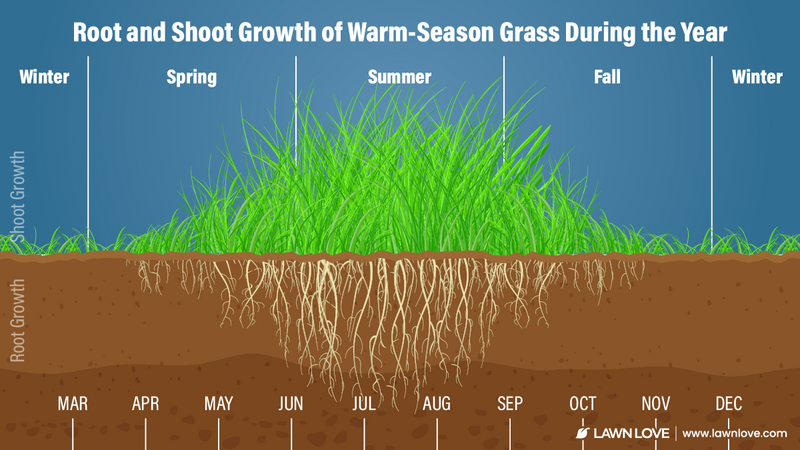
You really only need pre-emergent twice a year (late Feb/March and Sept/Oct). Applying it too much can inhibit zoysia's stolons and rhizomes from rooting as it tries to spread and fill in bare spots.
Skip the insecticides unless you have an active infestation. They stress the grass and soil biology unnecessarily. A grub preventive in late spring is fine, but only if you have a history of grub damage.
Zoysia is still waking up in April, so heavy nitrogen then can trigger spring fungus. Also, the herbicides in "weed and feed" products can scorch greening zoysia. Wait until May/June when the lawn is 100% green to start fertilizing, and stop all nitrogen by early September so it can prepare for winter.
local_blue_noob
I wouldn't want anyone to walk away thinking crape myrtles are completely useless. They support a variety of pollinators, beetles, birds, and beneficial predators. They especially support pollinators in cities during the summer months.
Putting them with native understory plants would be ideal, but having them is still better than a lot of the landscaping we see around here.
Pretty sure its a bug in the new version of PEP where the button does not show in the Departure's Report view. If you switch to Grid view, it should show up.